
If a spot in your floor feels soft, spongy, or bouncy underfoot, that is your house telling you something. In older Savannah homes the cause is usually a rotted subfloor — the structural layer under your finished flooring — and our coastal climate makes it more common here than almost anywhere. The good news is that it is fixable. The important part is fixing it before you put a new floor on top of it.
The signs of a rotted subfloor
A failing subfloor announces itself if you know what to feel and listen for. Watch for:
- Soft, spongy, or bouncy spots — the floor gives a little when you step on it.
- Sagging, dipping, or an uneven, sloping floor.
- New or spreading squeaks underfoot.
- Tile that cracks or grout that keeps failing in one area.
- A musty smell, especially near bathrooms or exterior walls.
Bathrooms, kitchens, laundry rooms, and spots near exterior doors are the usual suspects, because that is where water finds its way in.
Why coastal Savannah homes are prone to it
Wood starts to decay once its moisture content climbs above roughly 20%. Savannah's air averages around 72% relative humidity and pushes near 80% in late summer, and a lot of our older homes sit on pier-and-beam framing over a crawlspace that traps damp ground air right under the floor. Add a slow plumbing leak or a poorly vented crawlspace and the subfloor stays wet enough, long enough, to rot.
There is often a second culprit working alongside the moisture: termites. Subterranean termites — including the aggressive Formosan species found along the coastal South — are drawn to damp wood, so what looks like water damage is sometimes moisture and insects together.
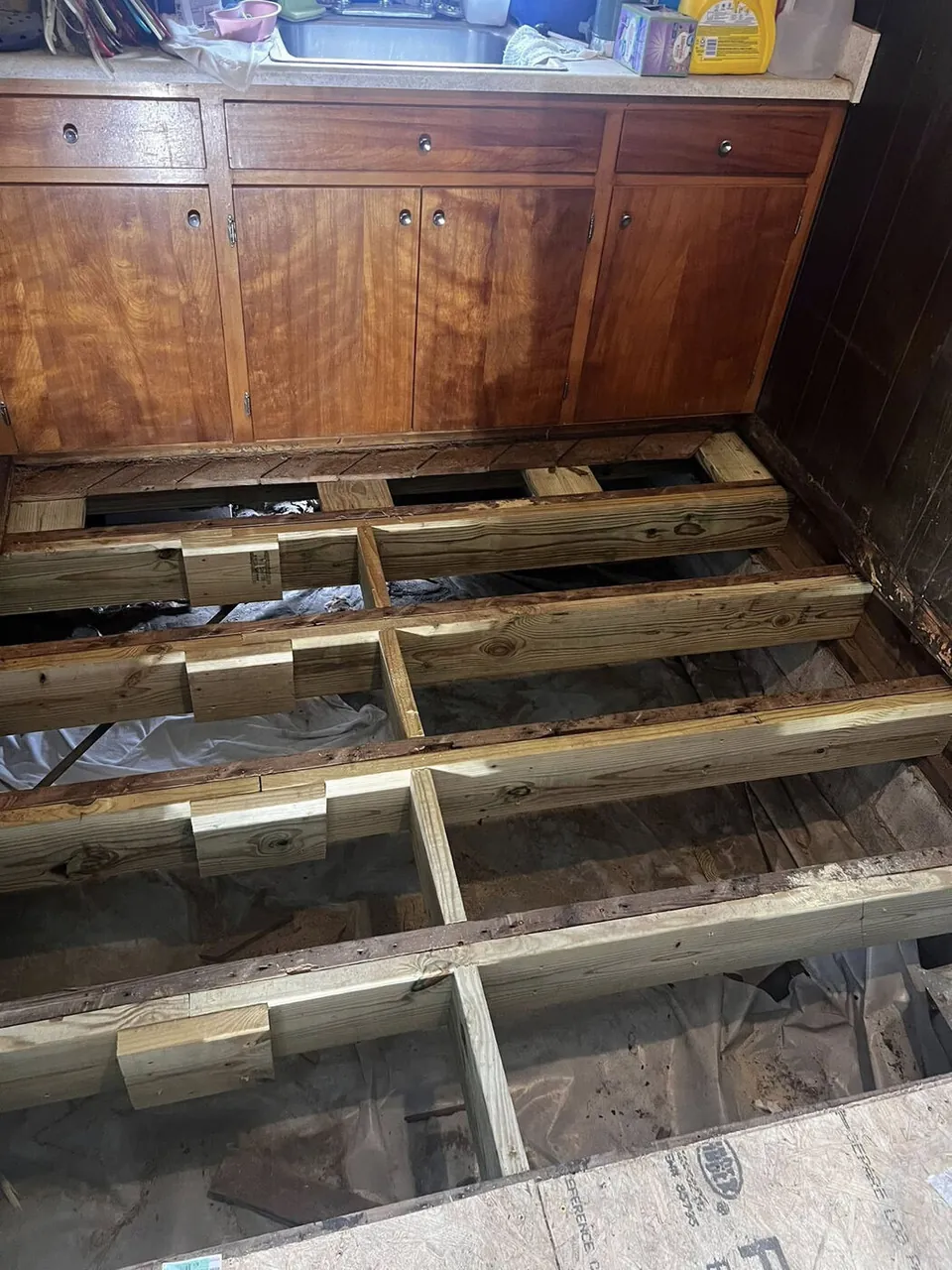
How we repair it
Covering a soft floor only hides the problem until it gets worse, so we fix the structure first. Depending on what we find, that means:
- Sistering joists. Bolting a new joist alongside a cracked or rotted one to carry the load again.
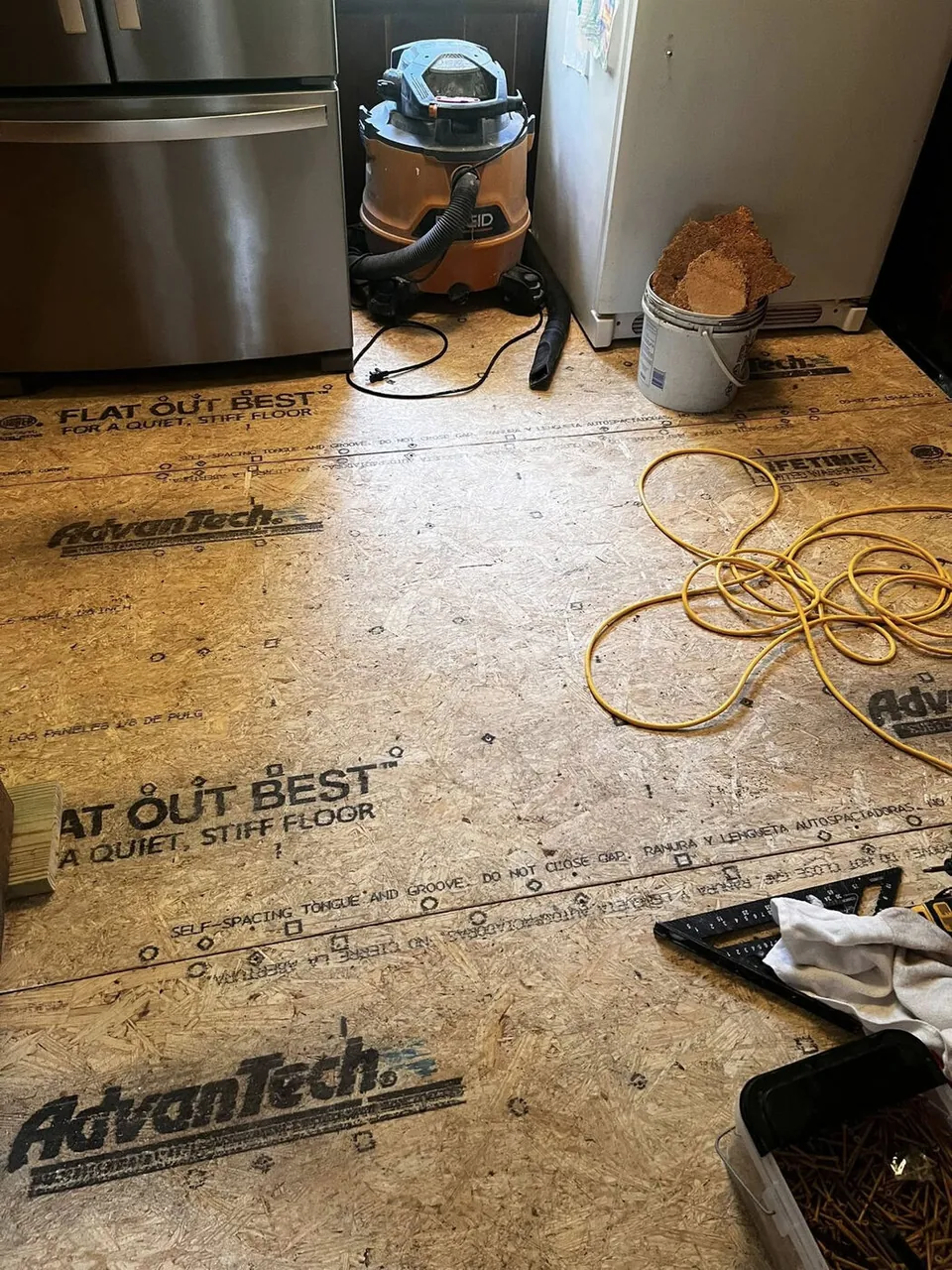
- Replacing the subfloor panels. Cutting out the rotted decking and installing new tongue-and-groove sheathing.
- Addressing the moisture source. Fixing the leak and, where needed, a crawlspace vapor barrier so it does not come back.
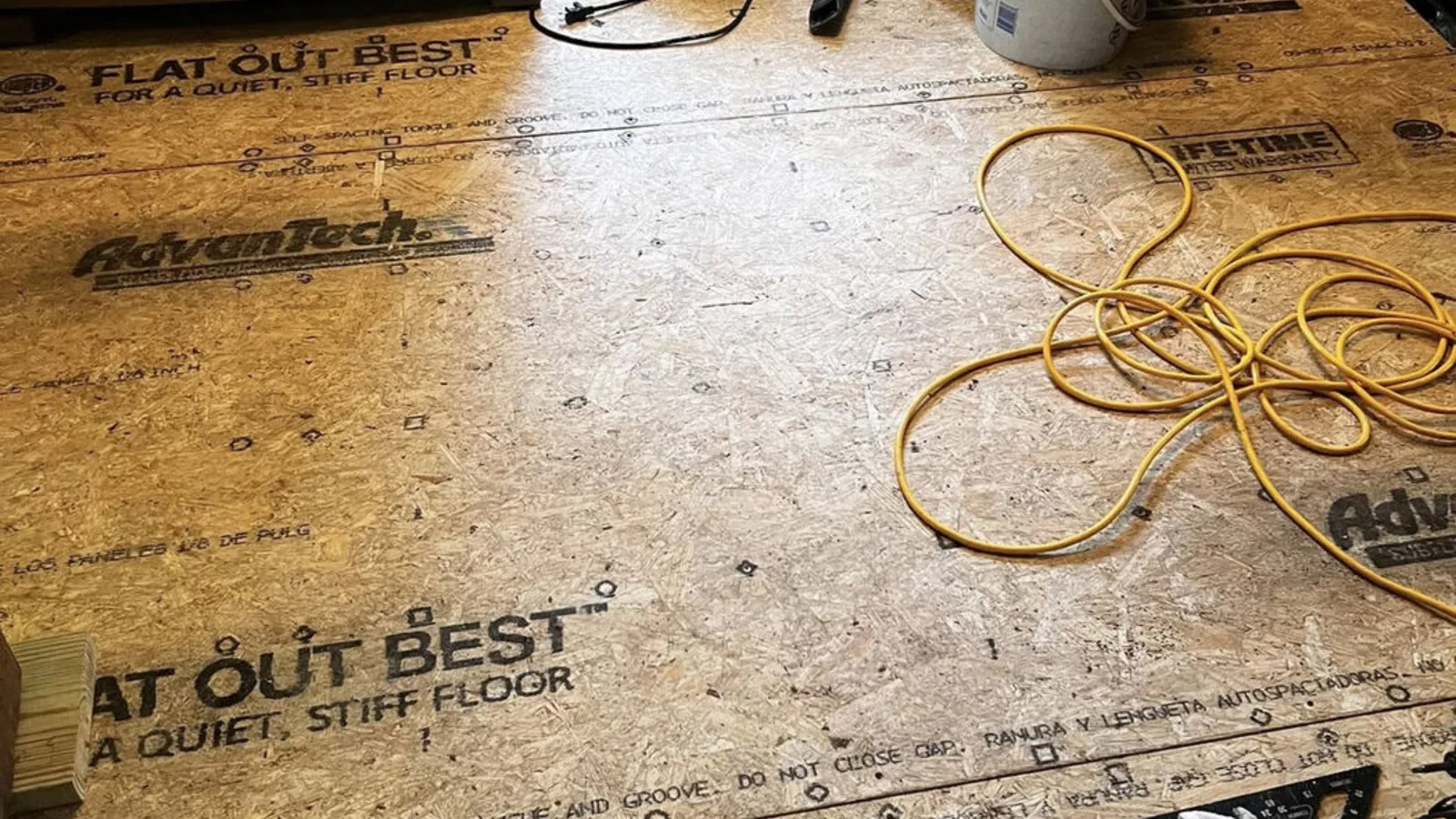
We rebuild with quality decking like AdvanTech sheathing — a tongue-and-groove panel rated to span 24-inch joist spacing and backed by a lifetime limited warranty — so the floor you stand on is flat, stiff, and dry. The right panel thickness depends on your joist spacing: building standards call for 19/32-inch at 16 inches on center and 23/32-inch for wider spacing.
What subfloor repair costs
Cost depends heavily on how much is damaged and how hard it is to reach, so treat these as ranges. Replacing subfloor decking commonly runs about a few dollars per square foot for the panel itself, more once joist work and new finished flooring are added. Sistering a damaged floor joist typically runs $100 to $325 each, higher where access is tight. If the underlying issue is a wet crawlspace, encapsulation is its own project — often in the $5,000 to $15,000 range. We give you a written number after we see the actual damage.
Crawlspace tip
A 6-mil ground vapor barrier in the crawlspace, with seams lapped at least a foot, is one of the cheapest things you can do to keep moisture out of your floor structure. It is required by code in vented crawlspaces and it pays for itself in saved wood.
Fix it once
A rotted subfloor is not a cosmetic problem, and it does not get better on its own. Catch it early, fix the structure and the moisture source together, and your floors stay solid for decades. It is also the step that has to happen before any new floor goes down — which is exactly why we check for it on every flooring job. It is also the kind of work worth vetting carefully — here is how to choose a remodeling contractor in Savannah. See our subfloor and structural repair work.
Common questions
The usual signs are soft, spongy, or bouncy spots underfoot, sagging or sloping floors, new squeaks, tile or grout that keeps cracking in one area, and a musty smell — most often near bathrooms, kitchens, or exterior walls.
Wood starts to decay above about 20% moisture content, and Savannah humidity averages around 72% and climbs near 80% in late summer. Many older homes sit on pier-and-beam framing over a crawlspace that traps damp air, and termites — including the aggressive Formosan species along the coast — are drawn to the same damp wood.
It depends on how much is damaged and how easy it is to reach. Replacing subfloor decking commonly runs a few dollars per square foot for the panel, more with joist work and new flooring. Sistering a damaged floor joist typically runs $100–$325 each. A wet crawlspace that needs encapsulation is its own project, often $5,000–$15,000.
No — covering a soft or rotted subfloor only hides the problem until it gets worse, and it can ruin the new floor. We repair the structure and fix the moisture source first, then install the finished floor over a flat, solid, dry base.
Sources
Read next