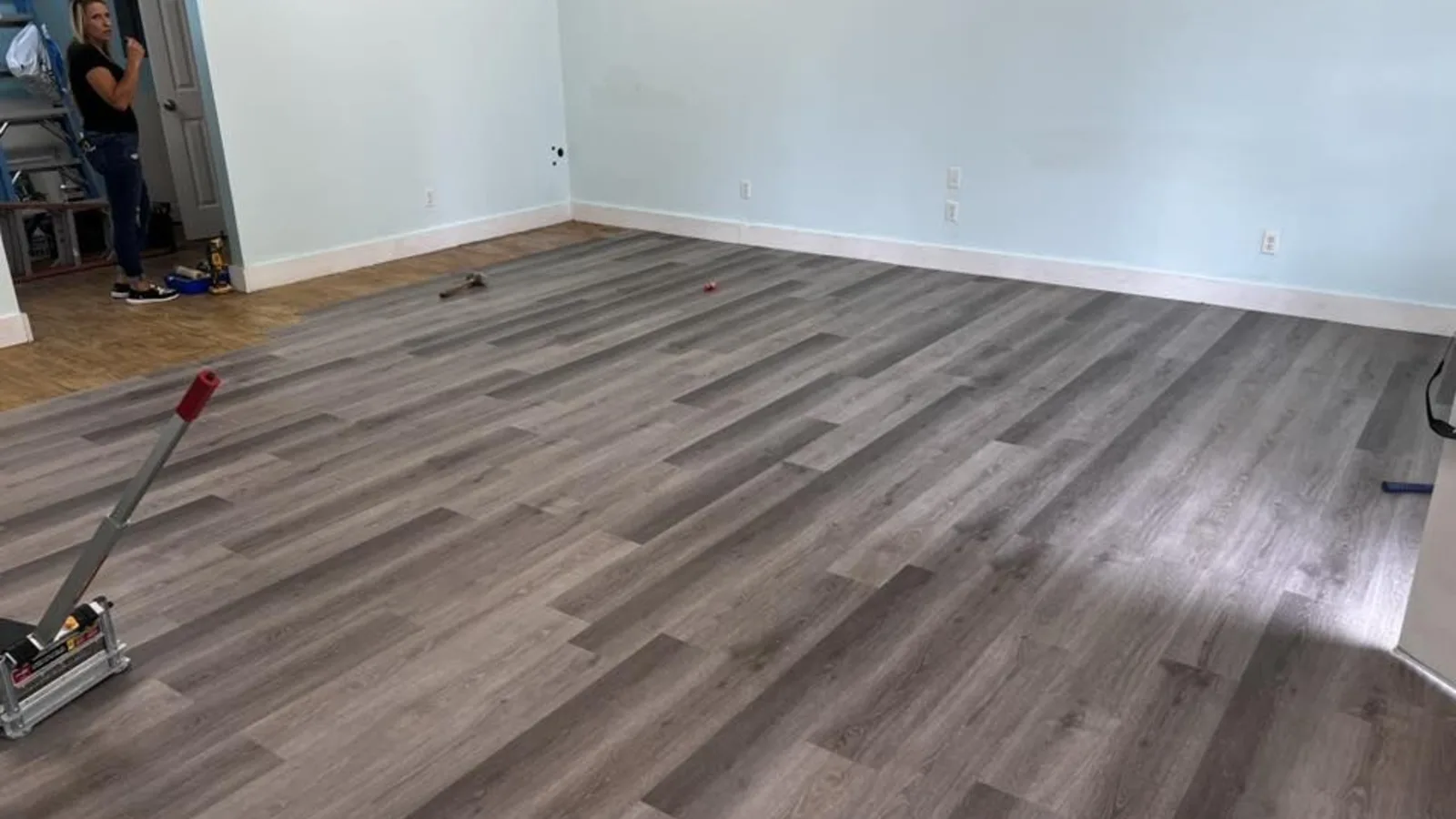
Picking the best flooring for Savannah's humid climate is a different problem than picking flooring in a dry state. Our air is heavy for half the year, our rain is heavy in summer, and a lot of homes here sit over a crawlspace that quietly breathes moisture into the subfloor. The floor that looks great in the showroom is not always the floor that survives a Lowcountry August.
We have installed floors across Savannah, Pooler, Richmond Hill, and out toward Tybee for years, and the same lesson keeps repeating: the right material plus a properly prepped subfloor lasts; the wrong material over a damp base fails no matter how much you paid for it. Here is how the three most common choices — luxury vinyl plank, tile, and hardwood — actually behave in coastal Georgia.
Why Savannah's climate is hard on floors
Savannah sits in a humid subtropical climate. The hottest month averages a high near 90°F, and the city gets roughly 48 inches of rain a year, with about half of it falling between June and September. Average relative humidity hovers around 73–74%, and the muggy stretch runs close to six months.
Wood and water do not get along. Every flooring material moves a little as it absorbs and releases moisture, but some move far more than others. That single fact decides most of what follows.
Luxury vinyl plank: the coastal workhorse
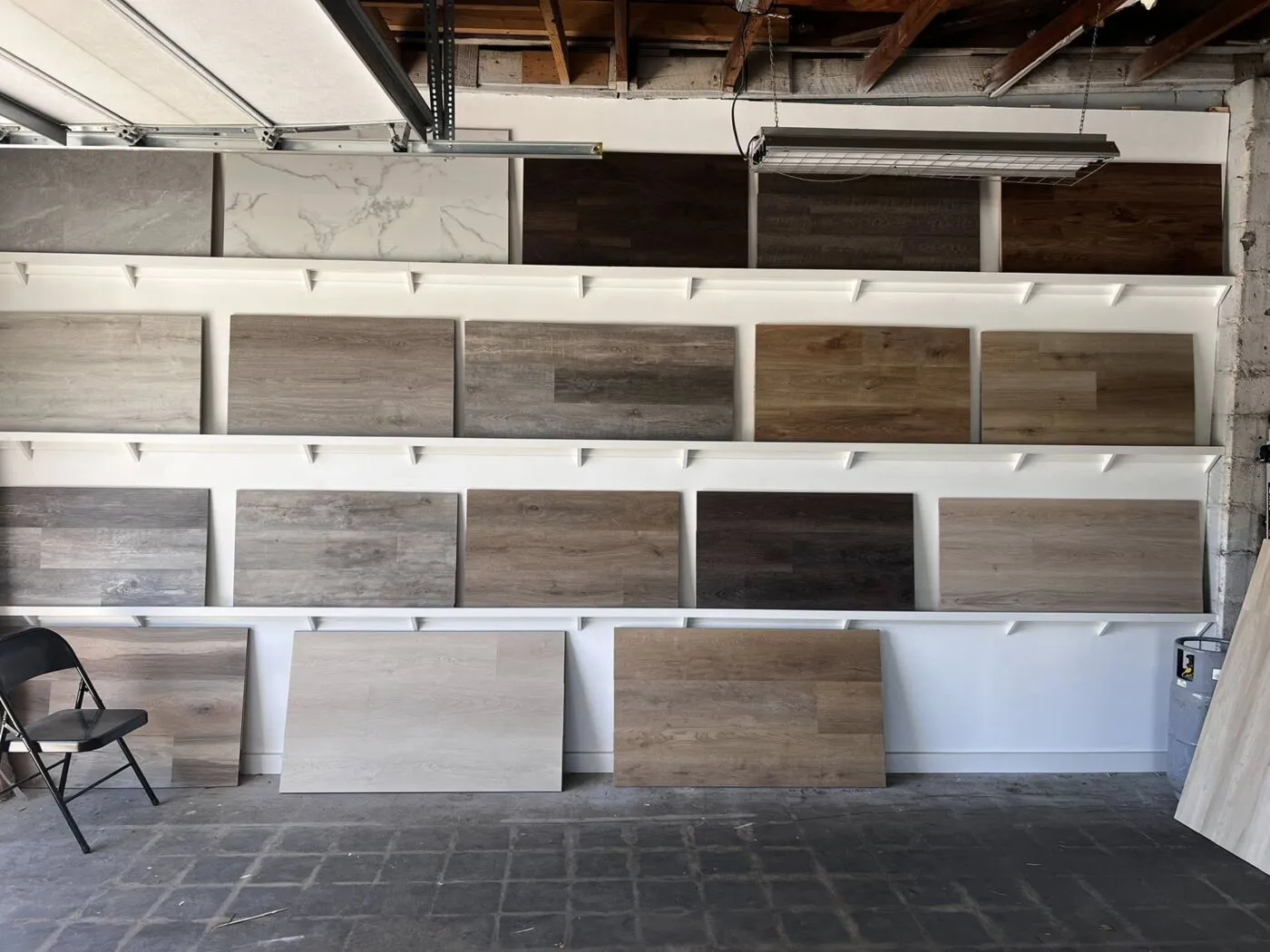
For most Savannah homes, rental properties, and busy family kitchens, we reach for luxury vinyl plank first. Modern rigid-core LVP is rated waterproof, so a spill, a mopping, or a humid week does not swell it the way it would swell a laminate or a solid-wood board. It looks like wood, it is comfortable underfoot, and it forgives the conditions that wreck other floors.
The catch — and it is the catch with every floor — is what goes underneath. LVP is thin and follows the shape of the subfloor. If the base is wavy, damp, or loose, the floor telegraphs every flaw and starts to click and gap. A waterproof plank over a bad subfloor is still a bad floor.
Tile: the most moisture-proof option
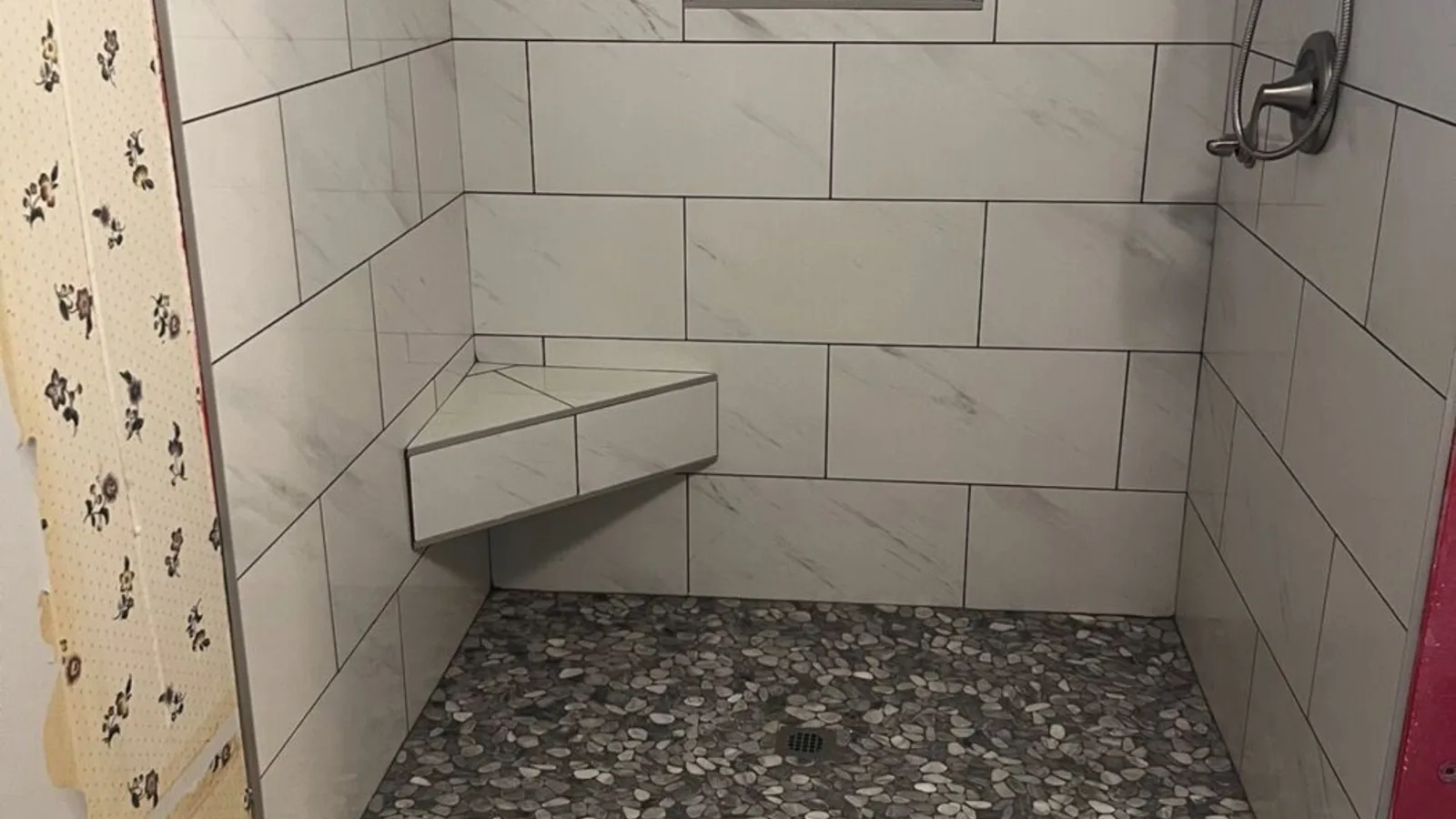
If you want the material that cares least about humidity, it is tile — specifically porcelain. By the ANSI A137.1 standard, porcelain absorbs 0.5% water or less, which makes it the most moisture-resistant common flooring you can buy. It does not swell, it does not need sealing, and it works just as well on a bathroom floor as it does running through a whole first floor.
Tile is harder underfoot and colder in winter, which some people love and some do not. In a coastal climate, that thermal mass is honestly more of a feature than a bug. The main thing tile asks for is a flat, solid, properly prepared substrate so the tiles and grout do not crack as the house moves.
Hardwood: beautiful, but respect the humidity
Hardwood is gorgeous, and people love it for good reason. It also moves the most. The National Wood Flooring Association recommends keeping a home at 35–55% relative humidity and 60–80°F for the life of a wood floor. Savannah's outdoor air sits well above that range, so a solid-wood floor only stays flat if your heating and cooling hold the indoor air steady year-round.
Let the humidity swing and solid wood reacts — cupping, crowning, and gapping as the boards take on and give up moisture. That is why, when a client really wants wood here, we usually steer them to engineered hardwood. Its cross-layered core is far more dimensionally stable than a solid plank, so it tolerates our swings much better while still giving you a real-wood surface.
If you do go with wood, acclimation is not optional
Wood flooring has to adjust to the home before it goes down. Engineered wood is typically acclimated at least 72 hours in the space, with the room held in that 35–55% / 60–80°F window for several days first. We also moisture-test the subfloor, because the NWFA only allows a small moisture difference between the flooring and the subfloor — about 2% for wider planks. Skip that step in Savannah and you are buying a callback.
It starts under the floor
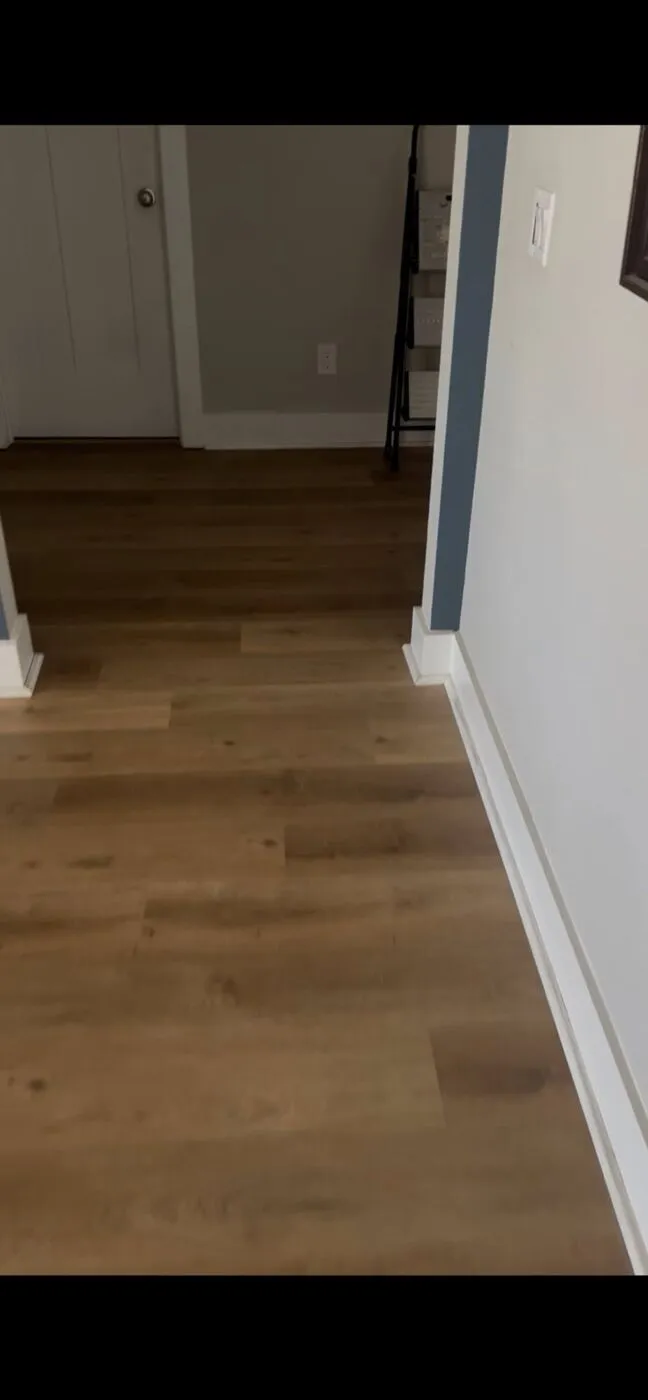
Whatever you choose, the floor is only as good as what is beneath it. Older homes around the Historic District and the in-town neighborhoods often sit on raised pier-and-beam framing over a crawlspace, and that crawlspace traps ground moisture. Newer builds out in Pooler and Richmond Hill are usually slab-on-grade, which has its own slab-moisture concerns. Both can hide rot, soft spots, or a base that is no longer level.
We check for all of it before a single plank or tile goes down. When the subfloor needs help, we handle the subfloor and structural repair first — because covering a soft floor only delays the failure. It is the least glamorous part of the job and the part that decides whether your floor is still tight in ten years.
Local tip
Salt air near Tybee, Skidaway, and the South Carolina Lowcountry adds to the moisture load on a home. The closer you are to the water, the more the case for porcelain tile and engineered or vinyl floors over solid hardwood.
So what should you choose?
For most Savannah homeowners, the honest answer is luxury vinyl plank for living areas and porcelain tile for kitchens, baths, and entryways. Both laugh off our humidity. If your heart is set on wood, go engineered, keep the house climate-controlled, and let it acclimate properly. Save solid hardwood for a home you keep at a steady temperature all year.
The best way to decide is to look at your actual room — its moisture, its subfloor, its traffic — instead of a generic chart. That is exactly what we do on a free estimate. Take a look at our flooring installation work, or keep reading about custom tile showers in Savannah.
Common questions
Porcelain tile and quality luxury vinyl plank (LVP) handle Savannah humidity best because they barely absorb moisture. Engineered hardwood is a good wood option since its cross-layered core stays more stable than solid hardwood. Solid hardwood is the riskiest choice here without year-round climate control.
They can. The National Wood Flooring Association recommends keeping interiors at 35–55% relative humidity and 60–80°F for the life of a wood floor. Savannah averages around 73–74% RH, so without steady heating and cooling, solid hardwood may cup, crown, or gap as it takes on and releases moisture.
Most modern rigid-core (SPC/WPC) luxury vinyl plank is rated waterproof, which is why it is popular in coastal Georgia kitchens, baths, and rentals. The subfloor underneath still has to be flat, dry, and solid for the floor to perform and stay quiet.
Engineered wood is typically acclimated at least 72 hours in the home, with the space held at 35–55% RH and 60–80°F for several days first. We also moisture-test the subfloor, since the NWFA allows only a 2–4% moisture difference between the flooring and the subfloor.
Sources
- Climate-Data.org — Savannah climate (humid subtropical, Cfa)
- Weather Spark — Average weather in Savannah, Georgia
- NWFA interior climate guidance (35–55% RH, 60–80°F)
- NWFA moisture-content tolerances for wood flooring
- NWFA installation & acclimation guidelines (72-hour minimum)
- ANSI A137.1 — porcelain tile ≤0.5% water absorption
- TCNA — porcelain tile certification
Read next