Hiring the wrong contractor is expensive in a way that goes beyond money — it costs you time, peace of mind, and sometimes a second contractor to fix the first one's work. The good news is that the homeowners who get burned almost always skipped the same handful of checks. Here is exactly how to vet a flooring and remodeling contractor in Savannah, what to verify, and the red flags that should end the conversation.
Start with the license
In Georgia, a contractor needs a state license for residential work valued at $2,500 or more — counting materials and labor together. Licensing is handled by the State Licensing Board for Residential and General Contractors, a division of the Georgia Secretary of State. You do not have to take anyone's word for it: the Georgia Attorney General's office points homeowners to the Secretary of State's licensee search to verify a contractor's license yourself.
Then confirm insurance
Georgia requires licensed contractors to carry general liability insurance, and any contractor with three or more employees must carry workers' compensation. Ask for a certificate of insurance and make sure it is current. If a worker is hurt on your property or your home is damaged and the contractor is uninsured, that can become your problem.
The quick verification checklist
- License number — and confirm it on the state's verify site.
- Current general liability insurance (get the certificate).
- Workers' comp if they have a crew.
- A written, itemized estimate and contract.
- Real local references and recent reviews.
- A clear warranty on the work.
The red flags that should end it
Consumer-protection groups and the Georgia Attorney General flag the same warning signs again and again. Walk away if you see:
- Cash only, or "make the check out to me." A legitimate business invoices and accepts normal payment.
- No written contract. Everything should be on paper — scope, materials, price, timeline.
- A large upfront deposit. Georgia's guidance is no more than 25%, at most a third down. Never 50% or more upfront.
- Door-to-door pitches after a storm. "Storm chasers" who show up uninvited and pressure you to sign today are a classic scam.
A coastal Georgia warning
After hurricanes and big storms, out-of-town crews flood the Lowcountry looking for quick, uninsured cash work. Stick with established local contractors you can verify and come back to — the ones who will still be here next year if something needs attention.
Questions worth asking
Beyond the paperwork, a few questions tell you a lot about who you are hiring:
- Have you done work in homes as old as mine?
- Who is actually on the crew — employees or day-of subs?
- What happens if you open the wall and find rot or old wiring?
- What is the warranty, and what does it cover?
- Can I see a recent local job like mine?
Why older-home experience matters here
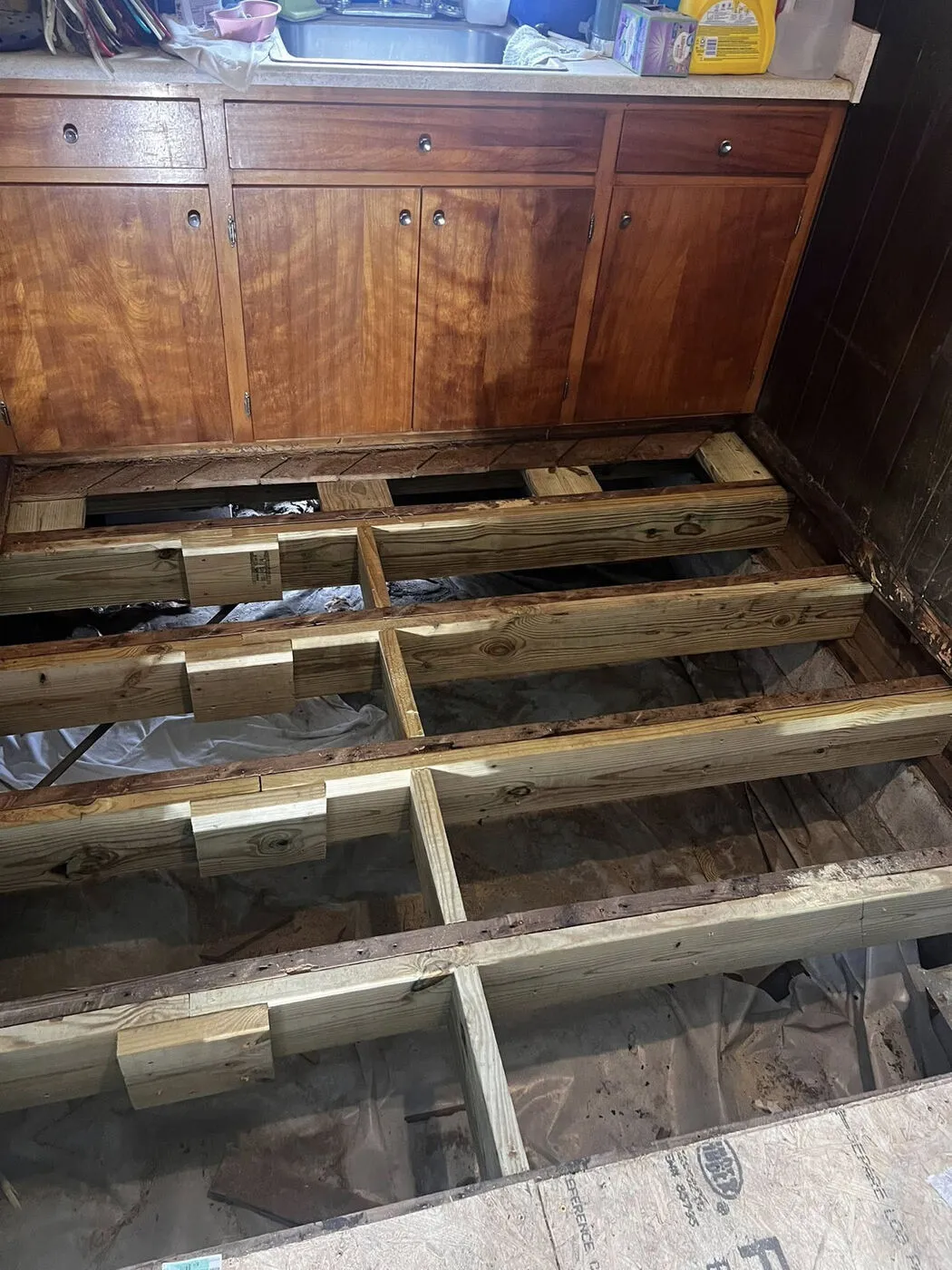
Savannah's pre-1950 homes hide knob-and-tube wiring, old plumbing, plaster, and pier-and-beam crawlspaces. A contractor who has worked on older coastal homes will plan for moisture and subfloor surprises instead of being blindsided by them mid-project.
The bottom line
Verify the license, confirm the insurance, get it in writing, and trust the red flags. Do those four things and you have eliminated almost every way a remodel goes wrong before it starts. When you are ready to talk numbers, read our Savannah kitchen and bath remodel cost guide or see how we work on our process page.
Common questions
Yes. Georgia requires a state license for residential work valued at $2,500 or more, counting materials and labor. Licensing is handled by the State Licensing Board for Residential and General Contractors under the Secretary of State.
Use the Georgia Secretary of State's online licensee search at verify.sos.ga.gov — the Georgia Attorney General's office directs homeowners there. Also ask for a current certificate of general liability insurance, plus workers' compensation if the contractor has employees.
Georgia's guidance is no more than 25%, and at most a third, down. Most legitimate contractors take 10–25%. A demand for 50% or more upfront, or cash only, is a red flag.
Cash-only payment or checks made out to an individual, no written contract, large upfront deposits, and door-to-door pitches after a storm. In the Lowcountry, out-of-town storm chasers are especially common after hurricanes.
Sources
Read next