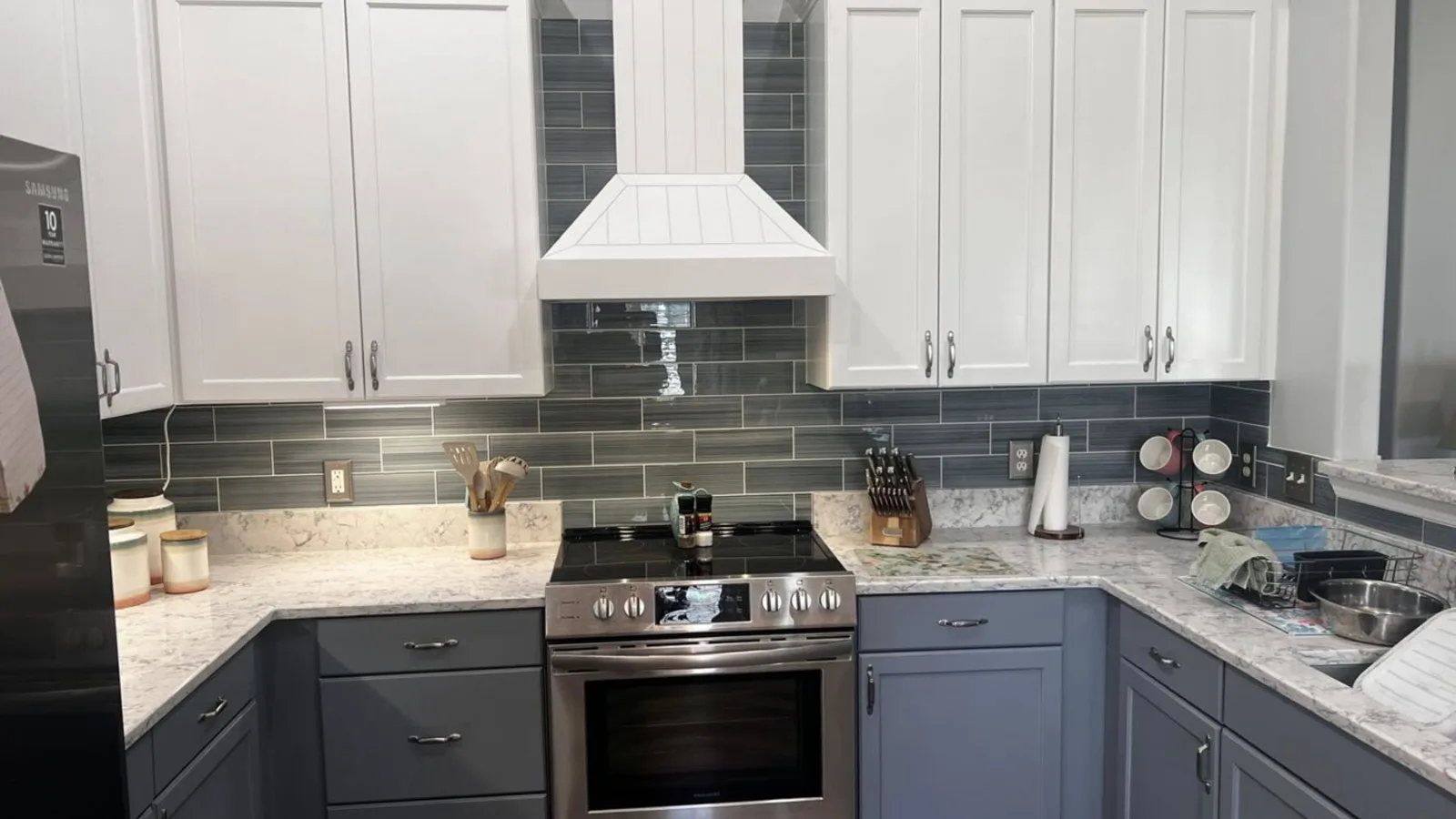

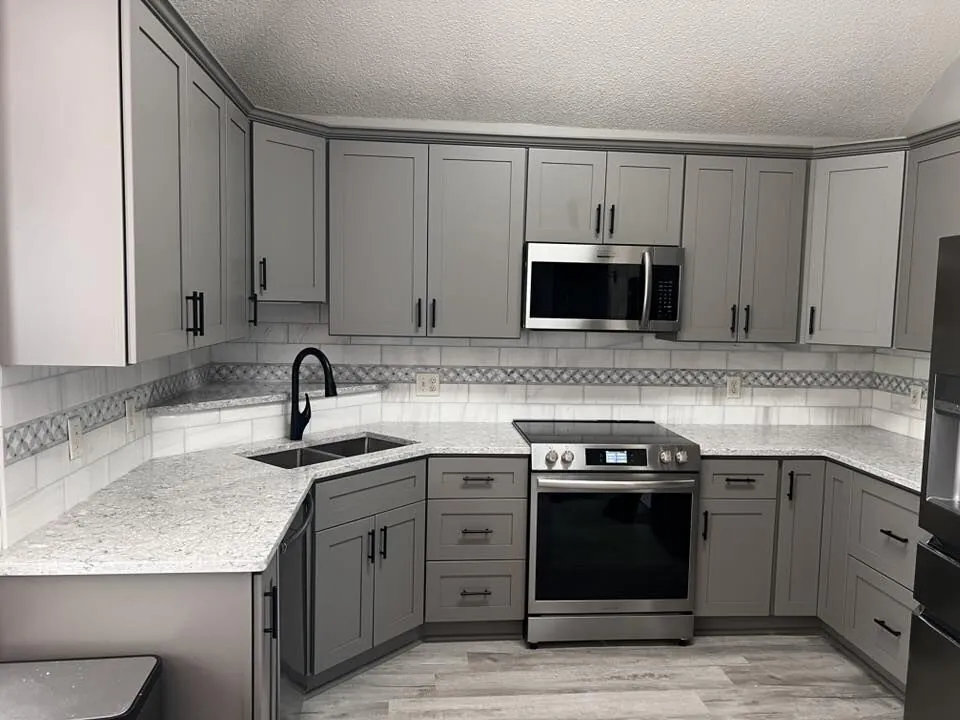
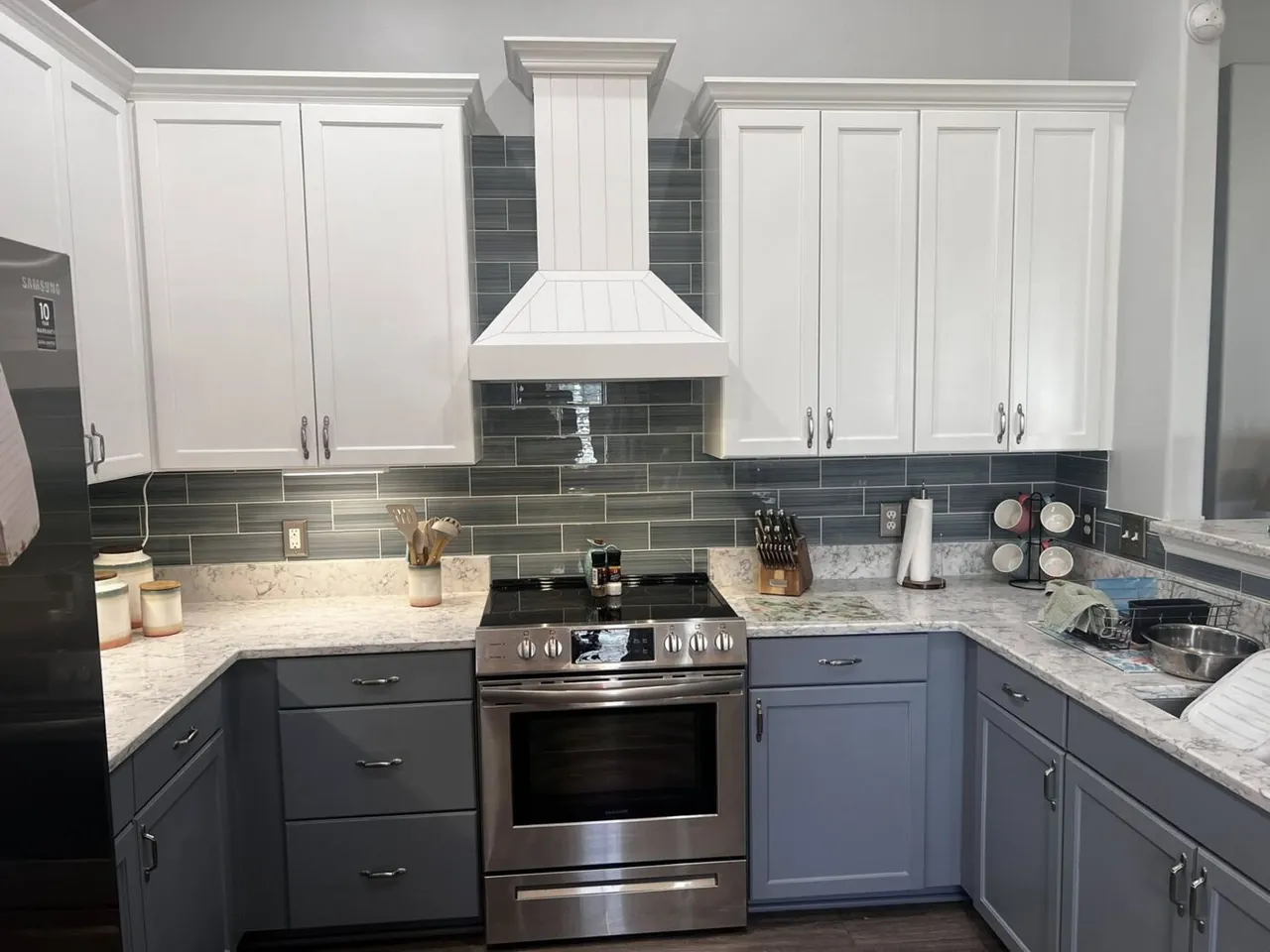
A backsplash is the smallest tile job in the kitchen with the biggest visual payoff. It is also the spot where the wall meets steam, grease, and splashes all day, so the material you pick has to look good and hold up. Here is a straight guide to backsplash tile for Savannah kitchens — the materials, what they cost, and how they handle our humidity.
What a backsplash costs
Most kitchen backsplash projects run $15 to $40 per square foot installed, with a typical total somewhere around $500 to $1,700. Because a backsplash is a small area, upgrading to a nicer tile usually adds less to the bottom line than people expect — it is often the best place in the kitchen to spend a little more.
The materials, compared
- Ceramic & porcelain subway — about $7 to $35 per square foot installed. The workhorse: affordable, classic, and easy to clean.
- Glass mosaic — roughly $15 to $50 per square foot installed. Non-porous, bright, and great for an accent or a full feature wall.
- Marble & natural stone — roughly $25 to $100 per square foot. Stunning, but porous and higher-maintenance.
- Large-format tile. Fewer grout lines for a clean, modern look that is easy to wipe down.
Intricate patterns like herringbone and detailed mosaics cost more to install — labor can climb well above a simple straight layout — because they take more time and skill to set right.
Why material matters in a humid kitchen
Between Savannah's summer humidity and the moisture your own cooking throws at the wall, a backsplash takes on more water here than in a drier climate. That is the case for non-porous materials. By the industry standard, porcelain is impervious — it absorbs 0.5% water or less, and glass absorbs essentially none. Both wipe clean and never need sealing. Natural stone is the opposite: it is porous and has to be sealed and re-sealed to keep stains and moisture out.
Don't skip the grout
Even with non-porous tile, grout can absorb moisture and grease. Sealed grout — and, near the coast, paying attention to it over time — keeps a backsplash looking new and resists the mildew our climate encourages.
What to know before you install
Two things separate a backsplash that looks crisp from one that looks amateur. The first is the wall behind it: in older Savannah homes, walls are rarely perfectly flat or plumb, and a good installer adjusts the layout so the tile reads straight anyway. The second is planning your layout around outlets, the range, and the cabinets so you are not left with awkward slivers of cut tile in the most visible spots. This is where a careful pro earns their keep.
The bottom line
For a Savannah kitchen, porcelain, ceramic, and glass give you the best mix of looks, low maintenance, and moisture resistance, with natural stone as a higher-upkeep splurge. Spend a little extra here — it is a small area that sets the tone for the whole room. See our tile work, or if you are planning a bigger project, read our kitchen and bath remodel cost guide.
Common questions
Most backsplash projects run $15–$40 per square foot installed, with a typical total around $500–$1,700. Because the area is small, upgrading to a nicer tile usually adds less to the bottom line than people expect.
Porcelain and glass. Porcelain is impervious — it absorbs 0.5% water or less — and glass absorbs essentially none; both wipe clean and never need sealing. Natural stone like marble is porous and must be sealed and re-sealed, which is more upkeep in Savannah humidity.
Ceramic and porcelain subway tile generally runs about $7–$35 per square foot installed. Intricate layouts like herringbone cost more because they take more time and skill to set.
The tile itself usually does not, but grout can absorb moisture and grease. Sealed grout — and keeping an eye on it over time near the coast — keeps a backsplash looking new and resists the mildew our climate encourages.
Sources
Read next